The first hour is almost always wrong
I've spent the past three years photographing ceramic workshops across Brittany and Normandy, and the pattern holds without exception: the first hour of any session is spent adjusting to a room I've never been in before, to a person who isn't yet comfortable with me in it, and to light that changes faster than I expect.
The images from that first hour are almost always technically fine. Good exposure, decent composition, correct focus. They're also almost always missing something I can't name until I look at the session as a whole, hours later. Something about attention. The maker's attention, yes, but also mine.
What natural light does to clay
Ceramic work is particularly difficult to photograph in artificial light because the surface of unfired clay reads differently under different spectrums. Under fluorescent studio lighting, wet clay flattens. The texture that communicates skill — the subtle compression marks left by a specific grip, the way a wall thins differently depending on which hand leads — disappears into a uniform grey.
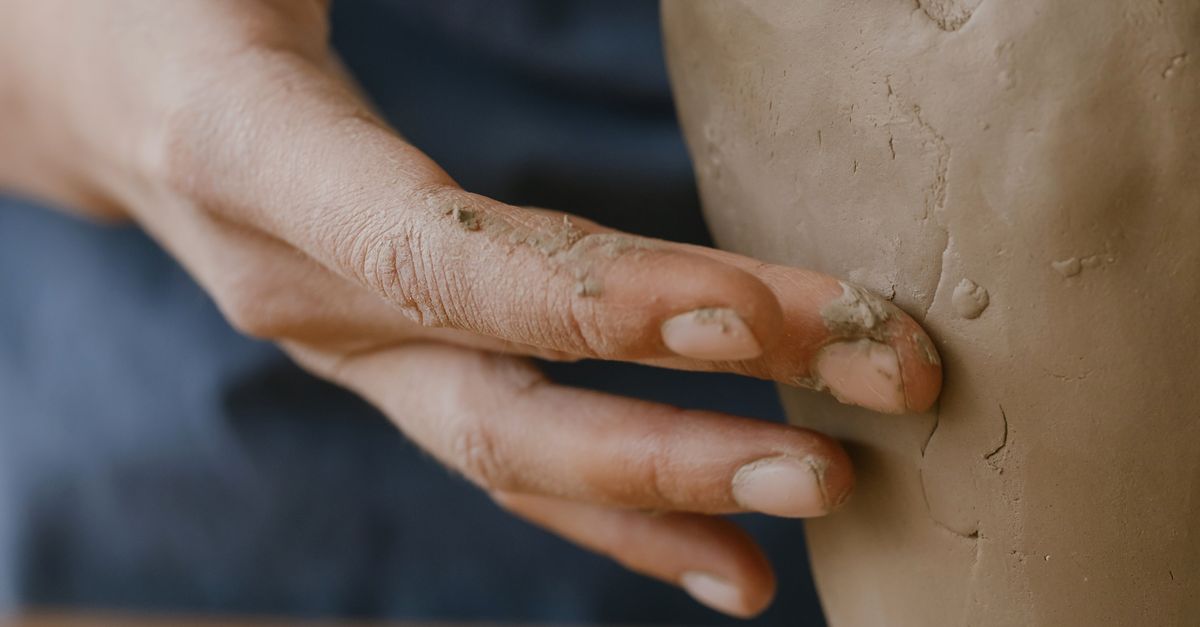
Natural light, particularly raking light from a north-facing window, does something useful: it exaggerates surface texture. The same marks that vanish under fluorescent light become legible again. A thrown pot's walls stop looking like a smooth cylinder and start showing the history of the hands that made them.
This is particularly noticeable in the transition from pulling to collaring — the point where a potter compresses the wall after raising it. The pinch marks left by that compression are shallow, maybe a millimetre or two of surface variation. Natural raking light from a low angle makes them visible. Direct overhead light obliterates them.
"The marks are always there. The question is whether the photograph can be bothered to notice them."
The problem with windows
Natural light from a window creates a different problem: it moves. Over a four-hour session, the angle of light through a west-facing window shifts enough to change the character of every image. Images taken at noon look like different photographs from images taken at three in the afternoon — different colour temperature, different shadow direction, different quality of texture.
For some commissions, this is fine. For editorial work where images from the same session will appear on the same spread, it creates a continuity problem that no amount of post-processing fully solves.
The practical answer, which I arrived at by accident during a session in a pottery in Quimper, is to stop trying to control the light and start tracking it instead. Rather than choosing a position relative to the window and staying there, I now move with the light — repositioning every thirty minutes or so, staying in the same relationship to the source as it shifts.
On the question of making the light work
There's a recurring discussion in documentary photography about intervention: when does controlling the environment stop being acceptable? I've never fully resolved this for myself, but for craft process work, I've arrived at a rough answer.
I won't ask a maker to move their wheel closer to a window. I won't ask them to work near the doorway because the light is better there. The work happens where it happens. What I will do is arrive early enough to understand the room before the session starts, and choose my position accordingly.
This sometimes means accepting worse technical images in exchange for images that show the work as it's actually done. That trade-off, more often than not, produces something more interesting.